
The Bhagavad Gita
700 verses that changed everything. A conversation on a battlefield. A guide for life.
What is the Bhagavad Gita?
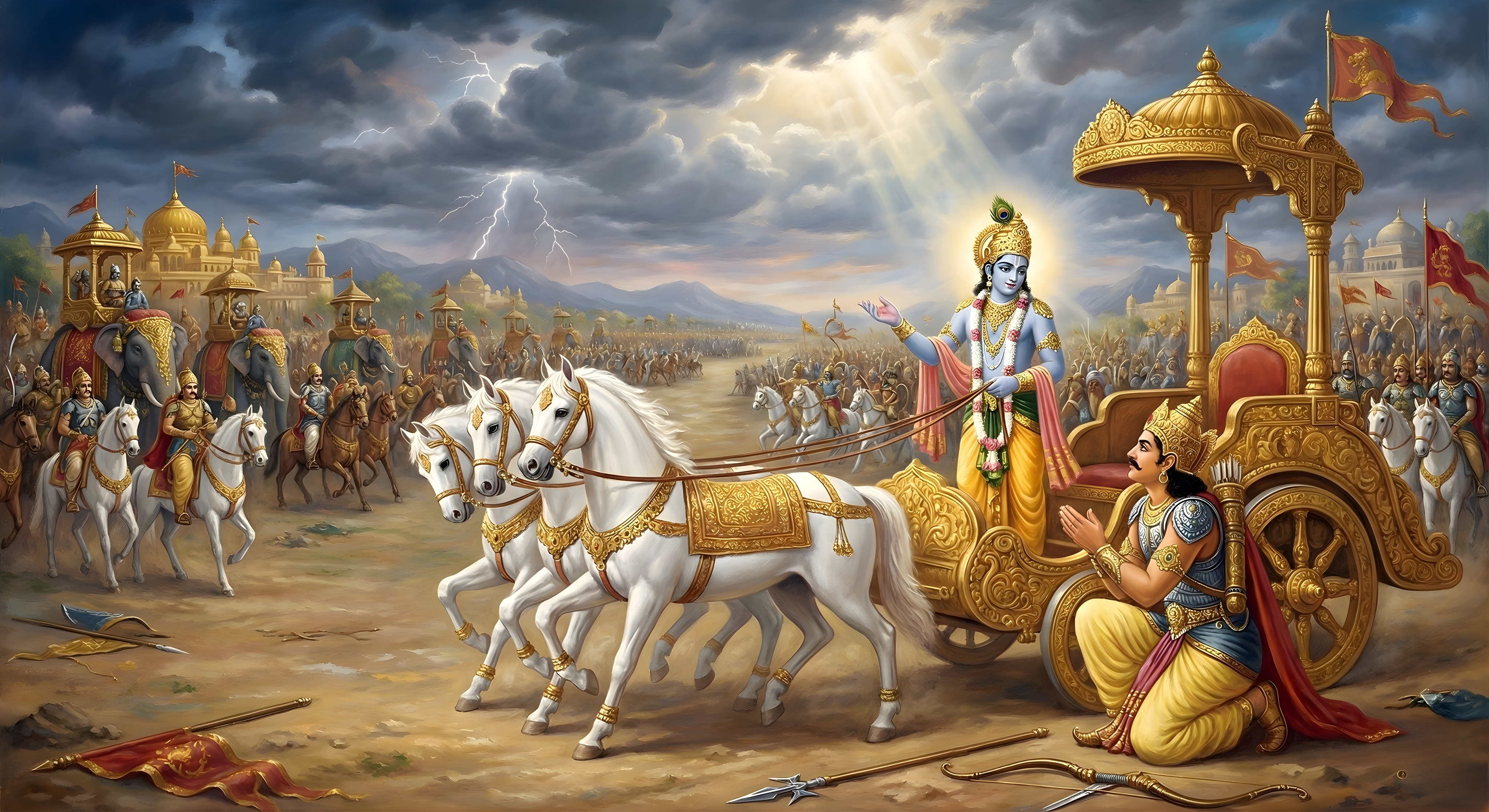
The Bhagavad Gita - the Song of the Lord - is a 700-verse conversation between Lord Krishna and the warrior prince Arjuna. It happens on a battlefield, right before a war that will destroy families and change kingdoms.
Arjuna is ready to fight. His arrows are sharp, his army is strong. Then he looks across the field and sees his grandfather, his teacher, his cousins. People he loves. People he's supposed to kill. He can't do it. He breaks down.
That's when Krishna speaks. What follows isn't just battle advice - it's a complete guide to life, duty, action, devotion, and self-knowledge. The Gita talks about work without anxiety, love without attachment, and understanding who you truly are beyond your body and mind.
The Story Behind the Gita
The Bhagavad Gita is part of the Mahabharata - the longest epic poem ever written. The Mahabharata tells the story of two families, the Pandavas and Kauravas, fighting for the throne of Hastinapura. Lies, betrayal, gambling, exile - everything leads to Kurukshetra, where armies face each other and Arjuna faces his crisis.
The Pandavas
Five brothers - Yudhishthira, Bhima, Arjuna, Nakula, and Sahadeva - who lost their kingdom through deceit and now must fight to reclaim it.
The Kauravas
Their hundred cousins, led by Duryodhana, who refuse to return even five villages to avoid war. Pride and greed have brought everyone to this battlefield.
The Dilemma
Arjuna must fight his grandfather Bhishma, his teacher Dronacharya, and his cousins. How do you do your duty when duty itself seems wrong?
The Gita begins where Arjuna's resolve ends. It's the moment between decision and action, where Krishna steps in with wisdom that transcends the battlefield and speaks to every human struggle.
Ved Vyasa & Ganesh ji
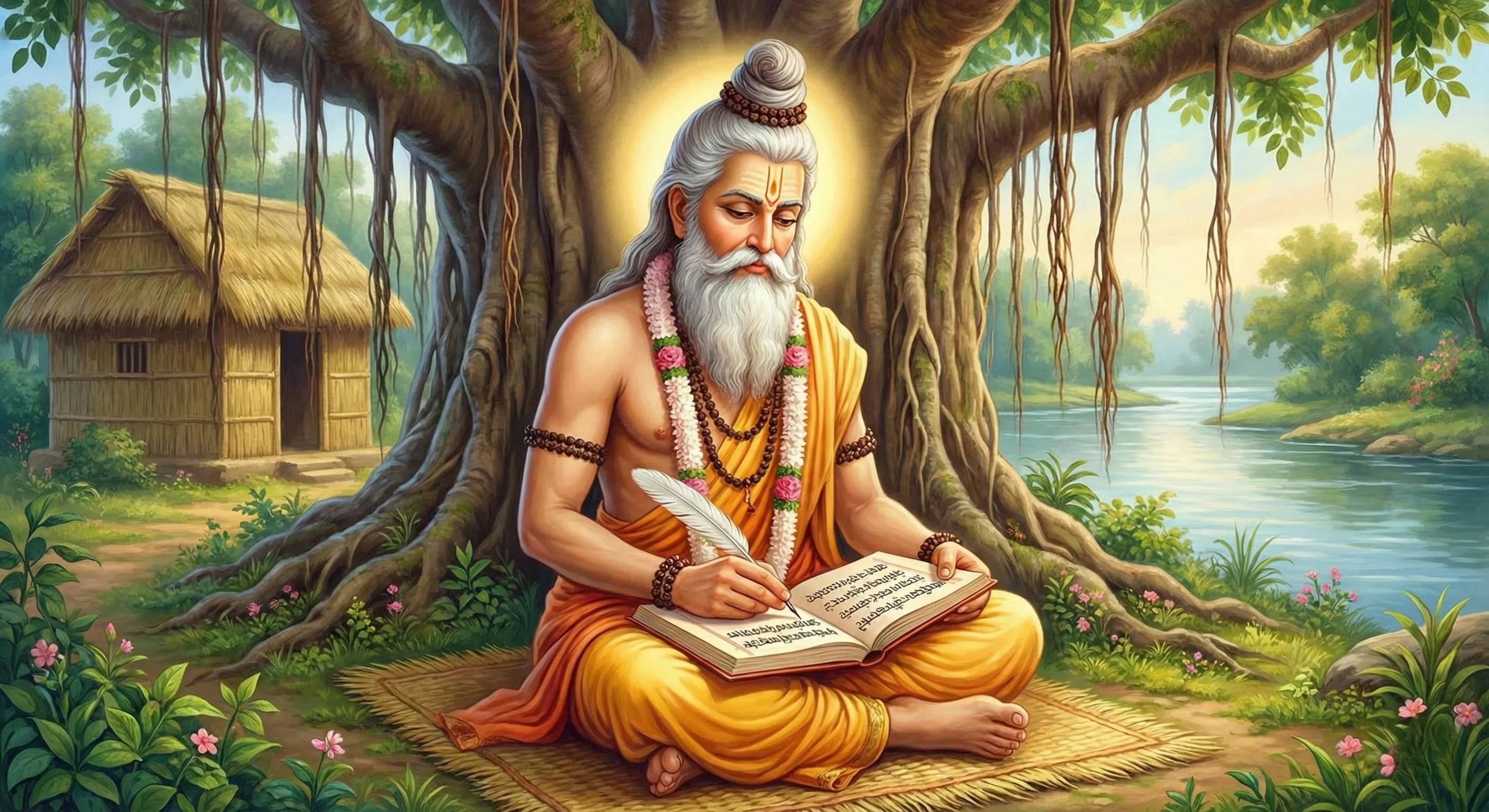
Ved Vyasa, also called Krishna Dvaipayana, is one of the most revered sages in Indian history. He didn't just write the Mahabharata - he compiled the four Vedas, authored the 18 Puranas, and even appears as a character in his own epic.
Significance in the Gita
The Bhagavad Gita is part of Vyasa's masterwork, the Mahabharata. This massive 100,000-verse epic tells the story of a family divided, a kingdom in conflict, and the conversation that changed everything.
Key Facts
- Classified the four Vedas
- Author of 18 Puranas
- Father of Dhritarashtra and Pandu
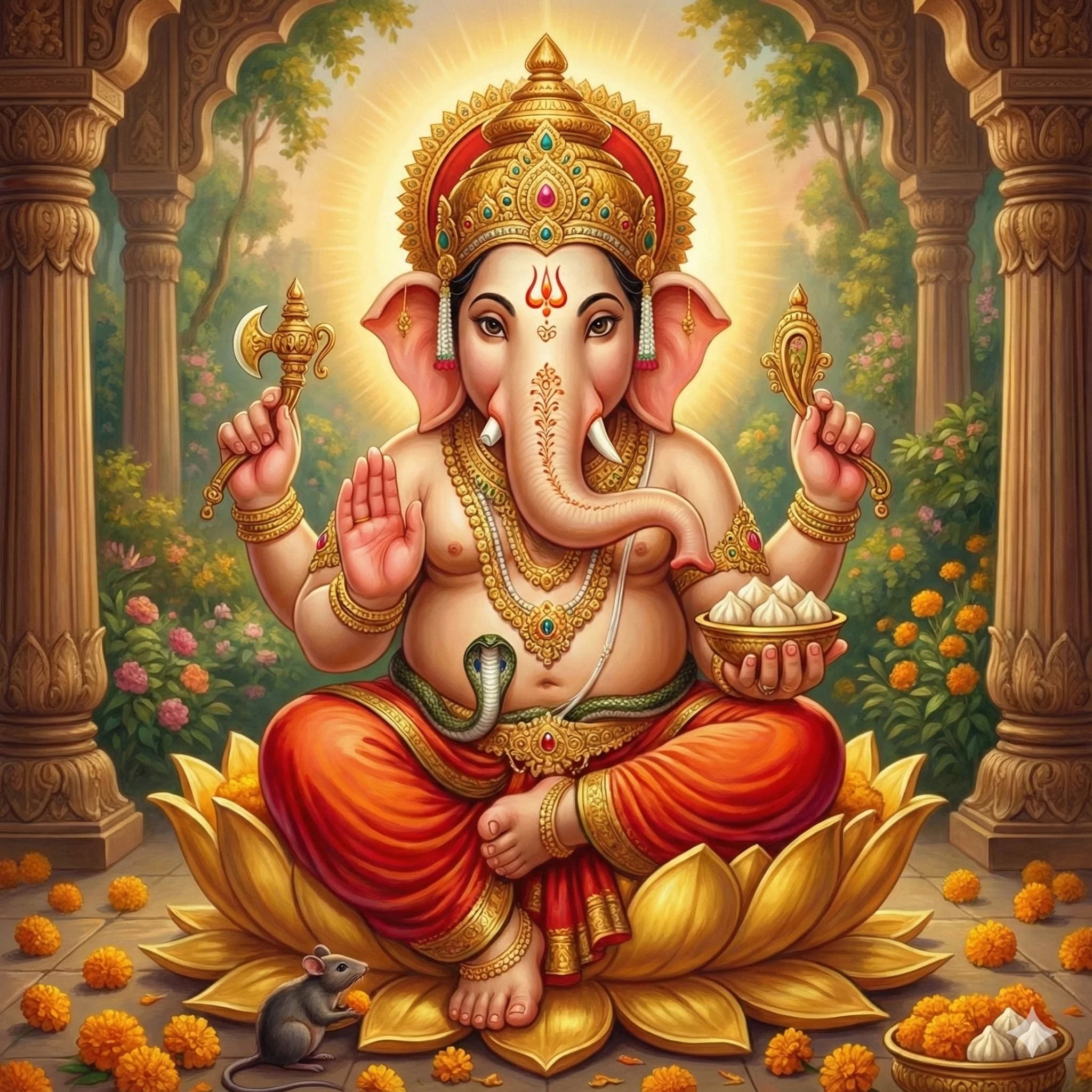
When Ved Vyasa needed someone to write down the Mahabharata as he composed it, he turned to Lord Ganesh. But Ganesh set one condition: Vyasa had to recite without pause.
Significance in the Gita
So Vyasa created complex verses to slow Ganesh down while he thought ahead. This divine collaboration gave us the Mahabharata - and within it, the Bhagavad Gita. Every verse was carefully crafted, every word chosen with purpose.
Key Facts
- Scribe of the Mahabharata
- Remover of obstacles
- Son of Lord Shiva and Goddess Parvati
The Main Characters
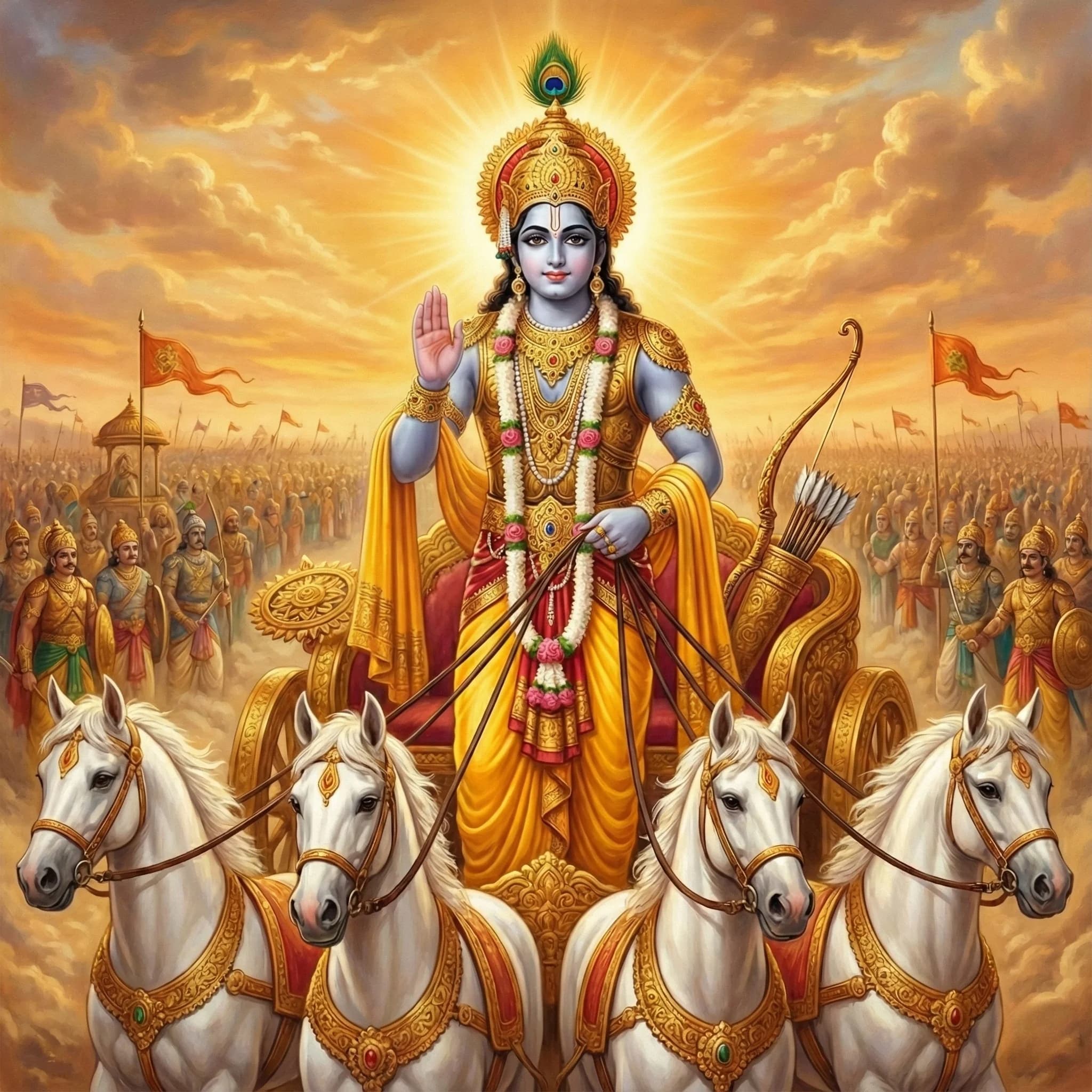
Lord Krishna is the speaker of the Bhagavad Gita and the eighth avatar of Vishnu. He's Arjuna's friend, charioteer, and guide. What makes Krishna's teachings powerful isn't just what he says - it's who he is.
Significance in the Gita
Krishna doesn't preach from a distance. He stands with Arjuna on the battlefield, in the middle of chaos, answering real questions with real solutions. In Chapter 11, he reveals his Vishvarupa - the cosmic form - showing Arjuna that he's talking to the Supreme Being himself.
Key Facts
- Eighth avatar of Lord Vishnu
- Incarnation of Narayan (from Nar-Narayan)
- King of Dwaraka
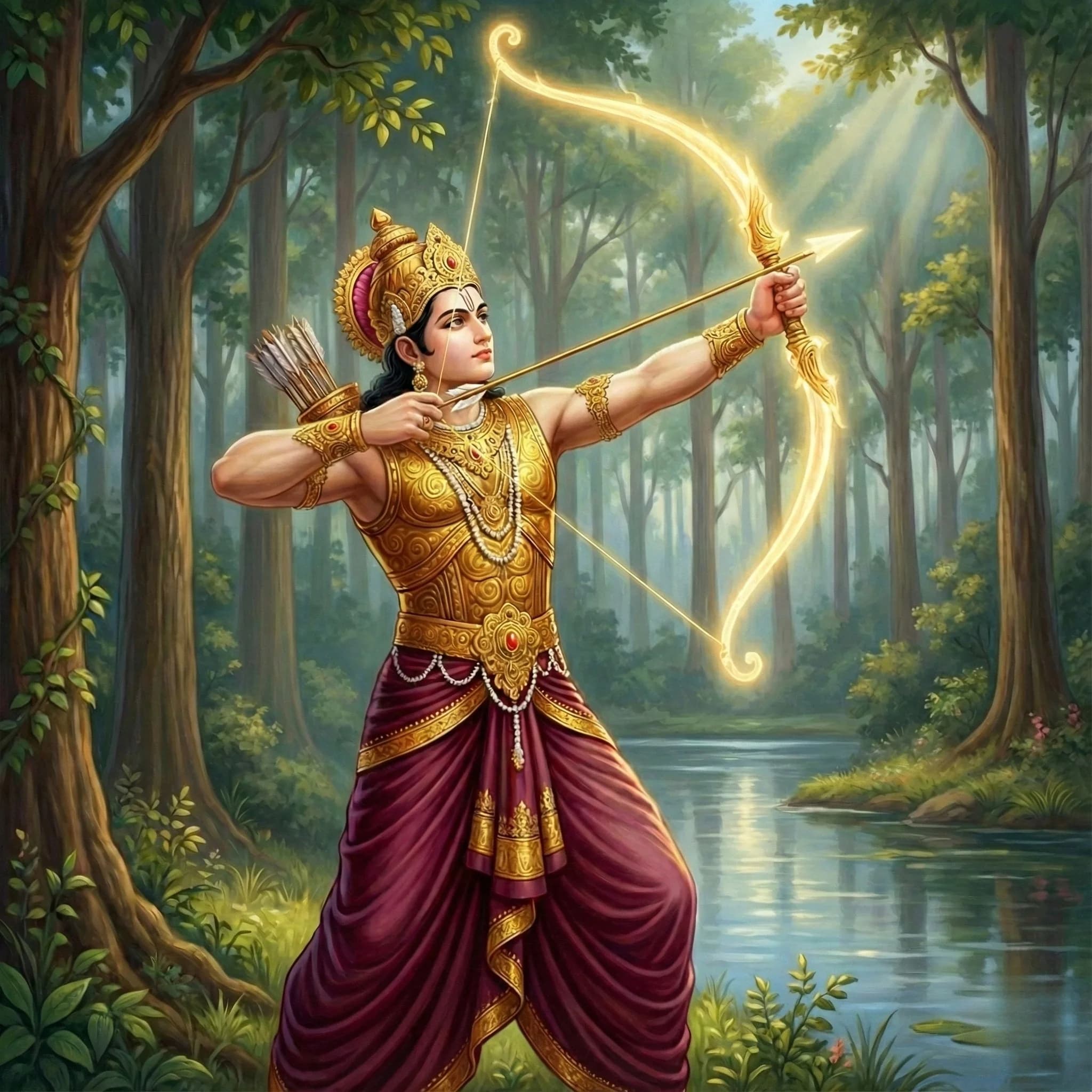
Arjuna is the third Pandava brother and one of history's greatest warriors. He's skilled, respected, and ready for battle. But when he sees his teachers, uncles, and cousins on the opposite side, he breaks down.
Significance in the Gita
This isn't weakness - it's the most human moment in the Mahabharata. Arjuna asks the questions we all ask: What's the right thing to do when all choices seem wrong? How do I act when I'm paralyzed by doubt? What's the point of success if it costs everything?
Key Facts
- Son of Indra (god of thunder)
- Incarnation of Nara (from Nar-Narayan)
- Winner of Draupadi's Swayamvar
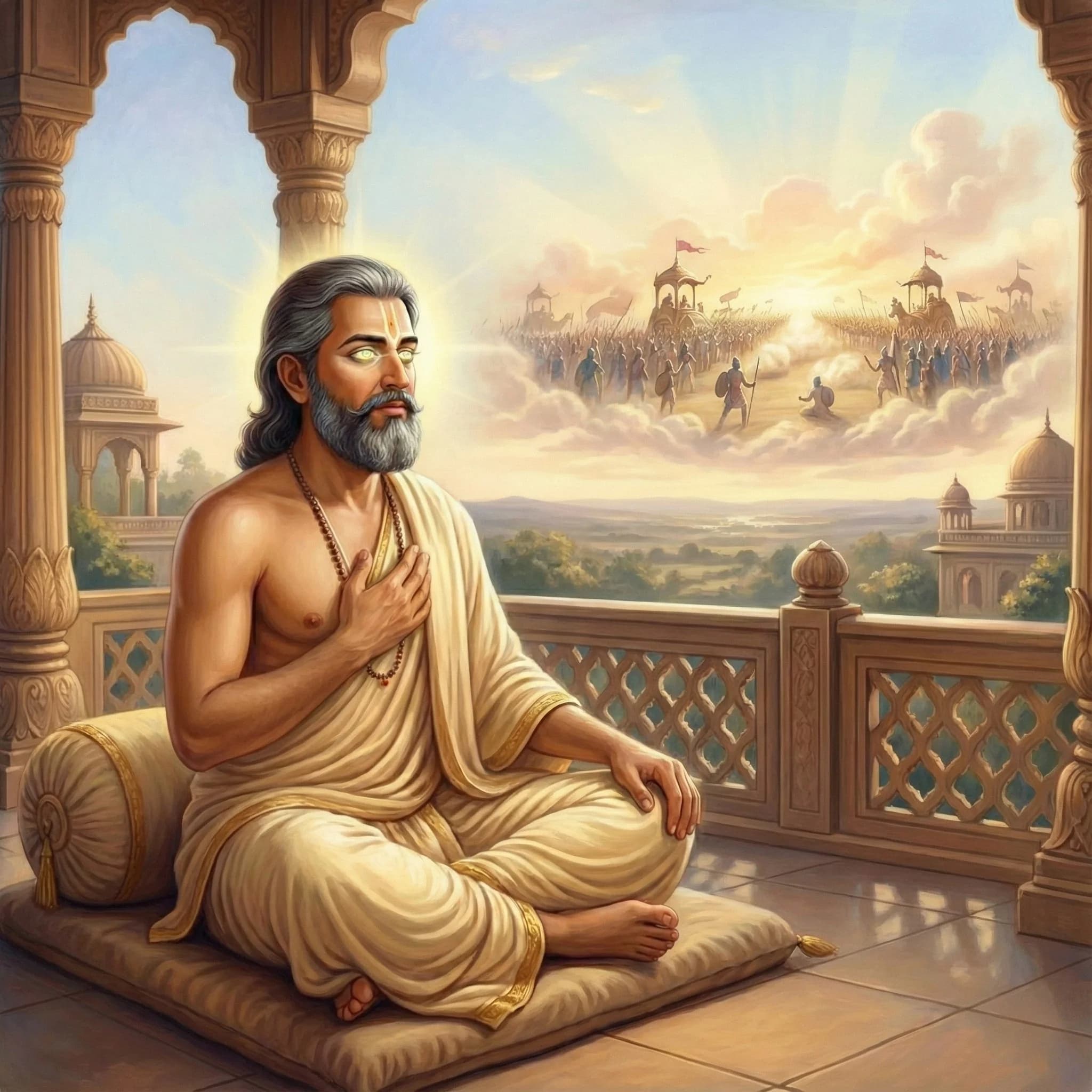
Sanjaya is the narrator who makes the Bhagavad Gita possible. As advisor to the blind king Dhritarashtra, he was blessed with divine vision by Ved Vyasa to witness the entire battle from afar.
Significance in the Gita
The Gita is framed as Sanjaya's narration to Dhritarashtra. He sees everything, hears everything, and reports it with precision. The last verse of the Gita is his - a powerful reflection on witnessing this divine conversation and what it means for anyone who hears it.
Key Facts
- Blessed with divine vision by Vyasa
- Narrated the entire war to Dhritarashtra
- One of the few survivors of the war
Why Read the Gita Now?
The Gita was spoken 5,000 years ago, but the questions haven't changed. The answers still work.
Choosing a major? Deciding between passion and practicality? The Gita talks about dharma - finding your path and walking it without comparing yourself to others. It's about doing your work well, not obsessing over outcomes you can't control.
Burnout is real. Workplace stress is real. The Gita teaches karma yoga - how to give your best effort while staying mentally detached from results. It's not about not caring; it's about not letting anxiety run your life.
Feeling lost? Questioning everything? The Gita addresses the big questions: Who am I? What matters? How do I live meaningfully? It offers three paths - action, devotion, and knowledge - and says you don't have to pick just one.
The Gita starts with Arjuna's grief and confusion. Krishna doesn't dismiss these feelings - he addresses them directly. The wisdom here helps you process change, handle loss, and find stability when everything feels uncertain.
The Gita talks a lot about equanimity - staying steady in success and failure, praise and criticism. It's ancient mindfulness practice, teaching you to observe your thoughts without being controlled by them.
Whether you're deeply religious or just spiritually curious, the Gita meets you where you are. It discusses meditation, self-realization, devotion, and the nature of consciousness - without requiring you to believe anything blindly.
The 18 Chapters
The Gita's 18 chapters are organized into three sections, each focusing on a different path to spiritual growth and self-realization.
The first six chapters focus on action - how to work, fight, and live without being consumed by desire or fear. It's about doing what needs to be done with full effort and zero attachment to how things turn out.
The middle six chapters explore devotion and love for the divine. It's not blind faith - it's understanding who Krishna really is, how to connect with that ultimate reality, and what real devotion looks like in daily life.
The final six chapters dive into knowledge - understanding the difference between body and soul, matter and spirit, the temporary and eternal. It all comes together in Chapter 18 with practical synthesis of everything taught.
Common Questions
What people ask about the Bhagavad Gita, answered clearly
The Bhagavad Gita (the Song of the Lord) is a 700-verse Hindu scripture that's part of the Mahabharata. It's a conversation between Lord Krishna and the warrior Arjuna on the battlefield of Kurukshetra, moments before a massive war. Arjuna is paralyzed by doubt, and Krishna responds with teachings on life, duty, action, devotion, and the nature of reality itself.
Ready to Read?
Start with Chapter 1 and see why millions have found guidance, peace, and purpose in Krishna's words to Arjuna.